What is Impressionism Art Style? A Deep Dive for Art Lovers
what is impressionism art style

What is Impressionism Art Style? A Deep Dive for Art Lovers

Discover the revolutionary movement that captured fleeting moments and transformed the art world forever.

Explore Impressionism Now

Key Takeaways

  • ✓ Originated in 19th-century France, primarily in Paris.
  • ✓ Emphasized capturing the fleeting 'impression' of a moment, rather than precise detail.
  • ✓ Pioneered by artists like Claude Monet, Pierre-Auguste Renoir, and Edgar Degas.
  • ✓ Characterized by visible brushstrokes, open composition, and emphasis on light and color.

How It Works

1
Rejection of Academic Norms

Impressionists broke away from the rigid rules of the French Academy, which favored historical and mythological scenes with smooth finishes. They sought a new way to depict reality.

2
Focus on Light and Color

Artists studied how light affected color and form at different times of day and in various weather conditions. Their goal was to render the optical experience of seeing.

3
Plein Air Painting

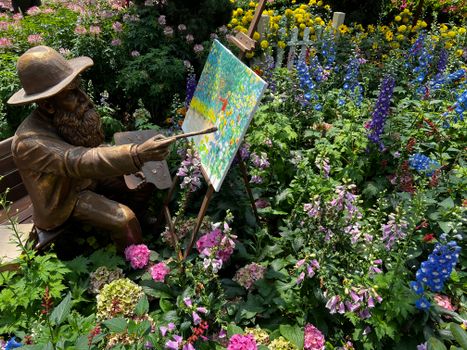
Many Impressionists moved their easels outdoors to paint directly from nature, capturing the immediate sensations of the landscape. This was a radical departure from studio work.

4
Subject Matter of Modern Life

Instead of grand narratives, Impressionists often depicted everyday scenes: landscapes, cityscapes, portraits, and leisure activities. This brought art closer to the lives of ordinary people.

The Genesis of Impressionism: A Revolution in Art
To truly understand what is Impressionism art style, we must first journey back to 19th-century France, a period of immense social and technological upheaval. The mid-1800s saw the rise of photography, new scientific theories of light and color, and a burgeoning urban middle class with different artistic sensibilities. The dominant art institution, the French Académie des Beaux-Arts, upheld strict rules regarding subject matter, composition, and technique, favoring highly polished, realistic depictions of historical, mythological, or religious themes. Artists who dared to deviate from these norms often faced rejection from the prestigious Salon exhibitions, the primary avenue for gaining recognition and sales. It was against this backdrop of conservative artistic establishment and rapid societal change that a group of young, rebellious artists began to experiment. They were drawn together by a shared dissatisfaction with the academic system and a desire to capture the world around them in a fresh, more immediate way. Led by figures such as Claude Monet, Pierre-Auguste Renoir, Edgar Degas, Camille Pissarro, and Alfred Sisley, these artists started to exhibit their work independently. Their first joint exhibition in 1874, held in the studio of photographer Nadar, proved to be a pivotal moment. One of Monet's paintings, 'Impression, Sunrise,' lent its title to a scathing review by art critic Louis Leroy, who sarcastically dubbed the group 'Impressionists.' Leroy intended it as an insult, suggesting their works were merely unfinished 'impressions' rather than proper paintings. However, the artists embraced the term, turning a derogatory label into the name of one of the most influential art movements in history. This initial exhibition was a shock to the art world. Viewers accustomed to meticulous detail and smooth brushwork were bewildered by the visible brushstrokes, vibrant colors, and seemingly unrefined compositions. Yet, the artists persevered, driven by a conviction that art should reflect the fleeting, subjective experience of modern life, not just its objective representation. They sought to capture the transient effects of light and atmosphere, the immediate 'impression' of a scene. This radical shift in focus from 'what' was painted to 'how' it was perceived fundamentally changed the trajectory of Western art, paving the way for countless future movements. Understanding this foundational rebellion is crucial to grasping the essence of modern art movements and what is Impressionism art style.

Key Characteristics and Techniques Defining Impressionism

Delving deeper into what is Impressionism art style reveals a distinct set of characteristics and innovative techniques that set it apart. The most striking feature is arguably the emphasis on visible, loose brushstrokes. Unlike the academic tradition of blending colors smoothly to conceal brushwork, Impressionists intentionally left their brushstrokes distinct, creating a textured surface that conveyed a sense of immediacy and movement. These strokes often appear short, thick, and comma-like, allowing colors to blend optically in the viewer's eye rather than on the canvas itself. Another hallmark is the revolutionary approach to light and color. Impressionists were fascinated by the way light transformed objects and scenes at different times of day and in varying atmospheric conditions. They abandoned the use of black and grey for shadows, instead opting for mixtures of complementary colors to create vibrant, luminous shadows that felt more natural. Their palettes became brighter, utilizing pure, unmixed colors applied directly to the canvas, often side-by-side, to achieve a shimmering effect. Monet's series paintings, such as his 'Haystacks' or 'Rouen Cathedral' series, perfectly exemplify this obsession, depicting the same subject repeatedly under different lighting and weather conditions to explore its ever-changing visual properties. Open composition is another defining trait. Impressionist paintings often feature subjects that appear to be cropped arbitrarily, as if captured in a snapshot. This reflects the influence of photography and the desire to present a moment in time rather than a carefully constructed, idealized scene. The focus shifted from a central, dominant subject to an overall impression of the scene, with elements often extending beyond the canvas edges, inviting the viewer to imagine the world continuing outside the frame. Furthermore, the subject matter itself underwent a significant transformation. Instead of historical narratives or grand allegories, Impressionists turned to scenes of modern urban and rural life. They painted landscapes, riversides, bustling Parisian boulevards, cafes, theaters, ballet dancers, and intimate portraits of friends and family. This focus on the everyday, the transient, and the personal brought art closer to the lives of ordinary people and reflected the changing social fabric of 19th-century Europe. These characteristics collectively define what is Impressionism art style and its enduring appeal.

The Enduring Legacy and Evolution of Impressionism

The impact of what is Impressionism art style extends far beyond its initial period, leaving an indelible mark on the trajectory of Western art. While initially met with skepticism and ridicule, Impressionism eventually gained widespread acceptance and admiration, profoundly influencing subsequent generations of artists. Its emphasis on individual perception, the subjective experience of reality, and the liberation of color and brushwork paved the way for numerous post-Impressionist movements and ultimately, modern art. Artists like Vincent van Gogh, Paul Cézanne, and Paul Gauguin, often categorized as Post-Impressionists, built upon the foundations laid by Impressionism but pushed its principles in new directions. Van Gogh intensified the emotional expressiveness of color and brushstroke, Cézanne explored the underlying geometric structures of nature, and Gauguin used color symbolically and explored exotic subject matter. These artists, while distinct in their individual approaches, all shared Impressionism's rejection of academic realism and its innovative use of color and form. Their work demonstrates how the initial breakthroughs of Impressionism sparked a creative explosion that continued to redefine artistic possibilities. Beyond its immediate successors, Impressionism's influence can be seen in various 20th-century movements. Fauvism, for instance, took the Impressionist liberation of color to an extreme, using vibrant, non-naturalistic hues to express emotion. Cubism, while a radical departure in form, shares with Impressionism a concern for how perception shapes reality. Even contemporary art continues to grapple with themes of subjectivity, light, and the ephemeral, echoing the concerns first articulated by the Impressionists. The movement also democratized art, bringing it closer to everyday life and making it more accessible to a broader audience. Its focus on capturing the beauty of the ordinary, the fleeting moment, and the changing world resonated with a society undergoing rapid modernization. Today, Impressionist paintings are among the most beloved and recognizable works in art history, commanding record prices at auction and drawing millions of visitors to museums worldwide. Their vibrant colors and shimmering light continue to captivate audiences, offering a window into a revolutionary period of artistic innovation. The legacy of Impressionism is not just in the beautiful paintings it produced, but in the profound shift it initiated in how artists perceive, interpret, and represent the world around them. It taught us that art can be about more than just literal representation; it can be about feeling, sensation, and the subjective experience of seeing. For further exploration of art's evolution, consider delving into the history of art movements.

Common Misconceptions and Tips for Appreciating Impressionist Art

Despite its popularity, there are several common misconceptions about what is Impressionism art style that can hinder a deeper appreciation. One frequent misunderstanding is that Impressionist paintings are 'unfinished' or 'sloppy.' As discussed, the visible brushstrokes were a deliberate choice, not a lack of skill, designed to capture the dynamism of light and moment. Another myth is that all Impressionist art looks the same; while sharing core principles, individual artists like Degas with his focus on dancers, or Renoir with his joyful depictions of social gatherings, developed highly distinct styles. Finally, some believe Impressionism is purely about pretty landscapes, overlooking the significant contributions to portraiture, cityscapes, and genre scenes. To truly appreciate Impressionist art, consider these tips: * **Step Back:** Impressionist paintings are often best viewed from a slight distance. The distinct brushstrokes and colors, when seen from afar, blend optically to create a more cohesive and luminous image, mimicking how the human eye perceives reality. * **Focus on Light and Color:** Pay close attention to how the artist has rendered light. Is it morning light, afternoon sun, or twilight? How does the light affect the colors of objects and shadows? Notice the absence of black and the vibrancy of the shadows. * **Identify the Moment:** Ask yourself what 'moment' the artist is trying to capture. Is it a specific time of day, a particular atmospheric condition, or a fleeting human interaction? The essence of Impressionism lies in its transient nature. * **Observe Brushwork:** Examine the individual brushstrokes. Are they short and choppy, long and sweeping, or dotted? How do they contribute to the texture and overall movement of the painting? * **Consider the Subject Matter:** Think about why the artist chose that particular scene. How does it reflect modern life in the late 19th century? What does it tell us about the leisure activities, social dynamics, or natural environment of the time? * **Contextualize the Rebellion:** Remember that these artists were challenging centuries of artistic tradition. Appreciate their courage and innovation in breaking away from established norms to forge a new path for art. By engaging with these aspects, you'll gain a much richer understanding of what is Impressionism art style and its revolutionary spirit. These insights can transform your viewing experience, moving beyond superficial enjoyment to a profound appreciation of the artistic genius and historical significance of the Impressionist movement.

Comparison

FeatureImpressionismAcademic Art (Pre-Impressionism)Post-Impressionism
BrushworkVisible, loose, distinct strokesSmooth, blended, invisible strokesVaried, often expressive, bold
FocusFleeting moment, light, color, atmosphereHistorical narratives, moral themes, idealized formsEmotion, symbolism, structure, subjective experience
Subject MatterEveryday life, landscapes, cityscapes, portraitsMythology, religion, history, grand portraitsPersonal vision, abstract forms, everyday life with deeper meaning
PaletteBright, vibrant, pure colors, luminous shadowsSubdued, earthy tones, dark shadowsIntense, non-naturalistic, symbolic colors
CompositionOpen, often cropped, snapshot-likeClosed, balanced, carefully arrangedVaried, often experimental, symbolic
Painting LocationOften 'en plein air' (outdoors)Primarily studio-basedBoth studio and outdoors, depending on artist

What Readers Say

"This article beautifully articulates what is Impressionism art style. I finally understand why Monet's series paintings are so important and how they capture light."

Sarah J. · New York, NY

"As an aspiring artist, this deep dive into Impressionism's techniques and historical context was incredibly inspiring. The explanation of visible brushstrokes was particularly insightful."

Mark D. · Los Angeles, CA

"I always enjoyed Impressionist art, but this piece really deepened my appreciation. The tips for viewing art from a distance made a huge difference in my next museum visit."

Emily R. · Chicago, IL

"A very comprehensive guide to what is Impressionism art style. While I wished for more specific artist examples in the 'legacy' section, the content was thoroughly engaging and well-researched."

David L. · Boston, MA

"I'm not an art expert, but this article made Impressionism accessible and fascinating. The comparison table was especially helpful in understanding its unique place in art history."

Jessica T. · Seattle, WA

Frequently Asked Questions

What is the primary goal of Impressionist artists?

The primary goal of Impressionist artists was to capture the fleeting 'impression' of a moment, focusing on the transient effects of light and atmosphere. They aimed to depict how they perceived a scene, rather than a meticulously detailed, objective reality, often painting outdoors to achieve this immediacy.

Was Impressionism accepted immediately by the art world?

No, Impressionism was initially met with harsh criticism and ridicule from the established art world, particularly the French Académie des Beaux-Arts. Critics found their visible brushstrokes and unconventional compositions to be 'unfinished' or 'sloppy.' However, the artists persevered, and the movement eventually gained widespread acceptance and popularity.

How can I identify an Impressionist painting?

You can often identify an Impressionist painting by its visible, loose brushstrokes, bright and vibrant colors, an emphasis on light and its changing effects, and an open, often cropped composition. The subject matter typically includes scenes of modern life, landscapes, and cityscapes, rather than historical or mythological narratives.

Is Impressionism still relevant today?

Yes, Impressionism remains highly relevant today. Its revolutionary approach to light, color, and subjective perception laid the groundwork for modern art and continues to influence artists. Moreover, its focus on capturing the beauty of everyday life and the transient moment resonates deeply in contemporary culture, making Impressionist works timelessly popular.

What is the difference between Impressionism and Post-Impressionism?

Impressionism focuses on capturing fleeting moments, light, and atmosphere with visible brushstrokes. Post-Impressionism, while building on Impressionist use of color and brushwork, explores more subjective emotional expression, symbolic meaning, or structural clarity. Artists like Van Gogh (emotion), Cézanne (structure), and Gauguin (symbolism) represent the diverse directions of Post-Impressionism.

Who should learn about what is Impressionism art style?

Anyone with an interest in art history, painting, or cultural movements should learn about Impressionism. Art students, museum-goers, and individuals seeking to understand the origins of modern art will find immense value in exploring this pivotal style and its lasting impact.

Are there any risks in misinterpreting Impressionist art?

The main 'risk' is approaching Impressionist art with expectations formed by academic realism, leading to a misinterpretation of its deliberate techniques as imperfections. Understanding the historical context and artistic intentions helps avoid viewing the visible brushstrokes or 'unfinished' look as flaws, allowing for a deeper appreciation of its revolutionary nature.

What is the future trend for appreciating Impressionist art?

The trend for appreciating Impressionist art continues to lean towards deeper contextual understanding, often aided by digital tools that allow for closer examination of brushwork and color. There's also a growing interest in the social history surrounding the artists and their subjects, connecting the art to the broader cultural shifts of the 19th century.

Now that you have a comprehensive understanding of what is Impressionism art style, we invite you to explore its masterpieces in person or delve into further resources. Let the vibrant colors and revolutionary spirit of Impressionism inspire your own appreciation of art and the world around you.

Topics: what is impressionism art styleimpressionist paintershistory of impressionismimpressionism characteristicspost-impressionism
Leo List
Brampton weed
Adultwork