Mastering How to Draw Realistic Portraits: A Guide
June 23, 2026 14 min read 2,882 words
Transform your drawing skills and create breathtakingly lifelike portraits with expert techniques.
Start Your Portrait Journey
The Foundational Pillars of Realistic Portrait Drawing: Anatomy and Proportion
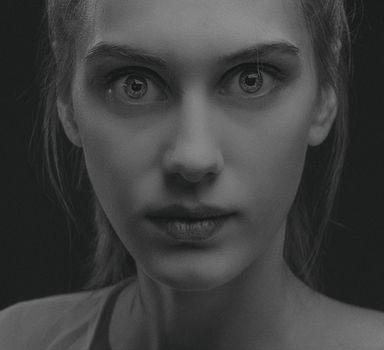 Photo: Alexander Krivitskiy / Pexels
Embarking on the journey of how to draw realistic portraits begins not with intricate details, but with a solid understanding of the underlying structure of the human face. Think of it as constructing a building; you wouldn't start with the paint and wallpaper, but with a robust foundation and framework. The human head, while seemingly complex, adheres to remarkably consistent anatomical principles and proportions. Mastering these foundational pillars is paramount for creating a believable and lifelike representation, ensuring your portrait doesn't just look like a face, but specifically like *a* face, full of character and depth.
First and foremost, delve into the study of skull anatomy. Understanding the bone structure beneath the skin – the cranium, jawbone, eye sockets, and nasal cavity – provides the artist with an invaluable internal map. This knowledge allows you to accurately place features and understand how light interacts with the bony prominences and depressions. Without this underlying structural awareness, features can appear to float or distort, undermining the realism you strive for. Spend time sketching skulls from various angles, internalizing their forms and relationships. This isn't about memorizing every bone, but rather grasping the general shape and how it dictates the outer form.
Once the skeletal foundation is understood, turn your attention to the universally accepted canons of facial proportion. While every face is unique, there are general guidelines that serve as an excellent starting point. The 'rule of thirds' is a classic: the hairline to the brow, the brow to the base of the nose, and the base of the nose to the chin often divide the face into three roughly equal sections. Similarly, the eyes are typically positioned halfway down the head, not just the face. The space between the eyes is often equivalent to the width of one eye, and the corners of the mouth align with the pupils. These are not rigid laws but rather flexible guides that help establish initial placement and ensure harmony. Practice drawing these proportional lines on blank head shapes until they become intuitive.
Furthermore, consider the planes of the face. The head isn't a smooth sphere; it's a collection of subtle angles and flat or curved surfaces. Artists like Andrew Loomis and John Asaro have developed simplified planar models of the head, breaking it down into manageable facets. Understanding these planes helps you interpret how light and shadow fall across the face, defining its three-dimensional form. For instance, the forehead, cheekbones, and jawline each present distinct planes that catch or recede from light differently. Practicing drawing these simplified planar heads will dramatically improve your ability to see and render form, moving beyond flat outlines to truly sculptural representations. This foundational work, while perhaps less glamorous than rendering an eye, is the secret sauce to truly realistic portraits. It allows you to build a believable structure upon which all subsequent details will rest, making your journey into how to draw realistic portraits far more successful and rewarding. For more general drawing tips, explore
fundamental drawing techniques.
Mastering Light, Shadow, and Value: Sculpting Form with Tone
 Photo: Peter Dyllong / Pexels
Once the foundational structure of the face is understood, the next critical step in how to draw realistic portraits is to master the interplay of light, shadow, and value. These elements are not merely decorative; they are the sculptors of form, the definers of depth, and the very essence of three-dimensionality in a two-dimensional medium. Without a sophisticated understanding and application of value, even the most accurately proportioned drawing will appear flat and lifeless. Value refers to the lightness or darkness of a color, or in drawing, the range from pure white to pure black, and all the grays in between. It's the language through which you communicate form, texture, and mood.
Begin by understanding the basic principles of light. Every object, including the human face, has a light side and a shadow side. Within the light side, you'll find the highlight – the brightest point where light directly strikes the surface – and midtones, which are various shades of gray that transition away from the highlight. On the shadow side, you'll encounter the core shadow, the darkest part of the shadow where light is completely blocked. Beyond the core shadow, you'll often see reflected light, which is light bouncing off surrounding surfaces and subtly illuminating the shadow area. Finally, don't forget the cast shadow, which is the shadow an object casts onto an adjacent surface. Identifying and accurately rendering these five elements – highlight, midtone, core shadow, reflected light, and cast shadow – is fundamental to creating convincing form.
Practice developing a full range of values. Create value scales using your chosen medium (pencil, charcoal, etc.), smoothly transitioning from the lightest white to the darkest black. This exercise builds muscle memory and control over your tools, allowing you to achieve subtle shifts in tone. When applying this to a portrait, resist the urge to outline features with harsh lines. Instead, use changes in value to define edges and forms. For example, the curve of a cheekbone isn't drawn with a line, but rather suggested by the gradual transition from a lighter value on its illuminated side to a darker value as it recedes into shadow.
Understanding how different light sources affect value is also crucial. Direct sunlight creates sharp, high-contrast shadows, while diffused light (like on a cloudy day) produces softer, more gradual transitions. Study how a single light source from above, below, or from the side dramatically alters the appearance of the face. This observational practice will train your eye to see value relationships, which are far more important than individual values. Don't just draw what you *think* you see; draw the relative lightness and darkness you *actually* observe. This mastery of light, shadow, and value is the magic ingredient that transforms a flat drawing into a realistic, three-dimensional portrait, imbuing it with depth and presence.
Capturing Nuance: Features, Texture, and Expressive Detail
With a strong foundation in anatomy, proportion, and value, the next frontier in how to draw realistic portraits is the meticulous capture of nuance – the subtle details that breathe life and individuality into your subject. This stage moves beyond the general structure to focus on the unique characteristics of each feature, the varied textures of skin and hair, and the elusive quality of expression. It's where the portrait transcends being merely a 'face' and becomes a specific, recognizable individual.
Each feature of the face – the eyes, nose, mouth, and ears – demands dedicated study and practice. The eyes, often called the windows to the soul, are particularly critical. They are not simple almond shapes; observe the delicate curve of the eyelids, the subtle folds, the moist tear duct, the reflective quality of the cornea and pupil, and the intricate patterns of the iris. Pay attention to how the upper lid casts a slight shadow on the eyeball, and how the lower lid often sits slightly forward. The nose, too, is more than just a triangular form. Study the bridge, the nostrils, the alar cartilages, and the tip, noting how light catches its various planes. The mouth involves the complex musculature around it, the individual curves of the lips, and the subtle shadows within the philtrum and at the corners. Even the ears, often overlooked, have unique folds and forms that contribute to a realistic depiction. Practice drawing each feature in isolation and then integrating them seamlessly into the overall facial structure, ensuring they are consistent with your established proportions and values.
Texture is another vital component of realism. Skin is not a uniform, smooth surface. It has pores, subtle wrinkles, blemishes, and varying degrees of oiliness or dryness. Instead of drawing individual pores, suggest texture through subtle variations in value and careful blending. Use techniques like stippling or very light, short strokes to imply the skin's surface quality without over-rendering. Hair, similarly, is not a solid mass but thousands of individual strands. Avoid drawing every single hair; instead, focus on capturing the larger masses, the flow and direction of the hair, and how light and shadow play across its volume. Use varying line weight and pressure to suggest individual strands and the overall texture, whether it's fine, coarse, curly, or straight. Remember that hair grows from the scalp and follows the curve of the head, not just floating around it.
Finally, capturing expression is perhaps the most challenging yet rewarding aspect. A realistic portrait isn't just about anatomical accuracy; it's about conveying emotion and personality. Observe how different emotions subtly alter the position of eyebrows, the crinkle around the eyes, the tension in the mouth, and the overall muscle movement of the face. Practice drawing various expressions from life or high-quality photographs. It's these nuanced details, the delicate interplay of features, textures, and expression, that elevate a portrait from a mere likeness to a compelling and engaging work of art, marking your mastery of how to draw realistic portraits. For further exploration of artistic principles, consider delving into
advanced art theory.
Common Pitfalls and Advanced Tips for Realistic Portraiture
As you continue your journey in how to draw realistic portraits, you'll inevitably encounter challenges. Being aware of common pitfalls can help you avoid them and accelerate your progress. Additionally, incorporating advanced tips can push your work from good to exceptional.
**Common Pitfalls to Avoid:**
* **Symmetry Overload:** While faces are generally symmetrical, they are rarely perfectly so. Over-correcting for symmetry can make a face look unnatural or robotic. Embrace subtle asymmetries; they contribute to realism and character.
* **Outlining Everything:** Relying too heavily on strong outlines flattens the image. Instead, use value changes to define edges and forms. Features should emerge from the interplay of light and shadow, not from hard lines.
* **Drawing Features in Isolation:** Thinking of eyes, nose, and mouth as separate entities rather than interconnected parts of a whole can lead to disjointed portraits. Always consider how features relate to each other in terms of size, placement, and angle.
* **Ignoring the Head's Volume:** Treating the head as a flat shape rather than a three-dimensional form. Remember the planes and how light wraps around the head. This is crucial for depth.
* **Over-rendering and Under-rendering:** Over-rendering can make skin look plastic or muddy, while under-rendering leaves the portrait feeling unfinished and lacking depth. Find a balance; suggest detail rather than explicitly drawing every single pore or hair.
* **Lack of Value Range:** Not pushing your darks dark enough or keeping your lights light enough. A full value range adds drama, depth, and realism.
**Advanced Tips for Elevating Your Portraits:**
* **Study Master Artists:** Analyze how artists like Rembrandt, Sargent, or Da Vinci handled light, form, and expression in their portraits. Don't copy, but learn from their techniques.
* **Work from Life:** Drawing from a live model, even for short poses, provides invaluable information that photographs often flatten. You'll observe subtle color shifts, minor movements, and three-dimensional nuances.
* **Understand Edges:** Not all edges are sharp. Some are soft, some are hard, and some are lost. Varying the sharpness of your edges creates atmospheric perspective and guides the viewer's eye.
* **Practice Gesture Drawing:** Quick, loose sketches of the head and body help you capture the overall energy and pose, preventing stiff, lifeless portraits.
* **Incorporate Backgrounds (Subtly):** A simple, out-of-focus background can add context and depth without distracting from the subject. Ensure it complements, rather than competes with, the portrait.
* **Experiment with Different Mediums:** While pencil is a great starting point, exploring charcoal, pastels, or even digital tools can open new avenues for texture and expression.
* **Seek and Apply Constructive Critique:** An outside perspective can highlight areas for improvement that you might overlook. Be open to feedback and use it to refine your skills.
By being mindful of these common pitfalls and actively integrating these advanced tips, your ability to how to draw realistic portraits will undoubtedly grow, allowing you to create increasingly compelling and lifelike representations.
