
 Photo: Tara Winstead / Pexels
Your Ultimate Guide: How to Start Painting for Beginners
Embark on your creative journey with confidence, learning everything you need to start painting today.
Start Painting NowKey Takeaways
- ✓ You don't need expensive supplies to start painting.
- ✓ Practice and experimentation are more important than perfection.
- ✓ Acrylics are often recommended for their versatility and ease of use.
- ✓ Learning basic color theory greatly enhances your painting skills.
How It Works
Start with essential, affordable materials like a few tubes of paint, brushes, and a surface. Don't overspend on professional-grade items initially.
Learn about primary, secondary, and tertiary colors, and how to mix them. This fundamental knowledge unlocks endless possibilities for your palette.
Experiment with different brushstrokes, layering, and blending on scrap paper or canvas. Focus on understanding how the paint behaves rather than creating a masterpiece.
Begin with simple subjects like abstract shapes, still life objects, or landscapes from reference photos. This builds confidence and hones your skills progressively.
Demystifying Painting Supplies for Beginners
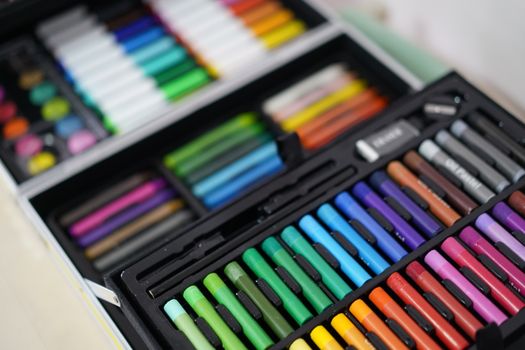 Photo: Orange Tomato / Pexels
First and foremost, choose your paint type. Acrylics are overwhelmingly recommended for beginners due to their user-friendly nature. They are water-soluble, meaning easy cleanup with just soap and water, dry relatively quickly, and are incredibly versatile, working on various surfaces from canvas to wood to paper. Unlike oils, they don't require harsh solvents, making them safer and more pleasant to work with in a home environment. A basic set of acrylics should include primary colors (red, blue, yellow), black, and white. From these five colors, you can mix an astonishing array of hues, teaching you foundational color theory in practice. Look for student-grade acrylics, which are more affordable and perfectly adequate for learning. Brands like Liquitex Basics, Winsor & Newton Galeria, or Golden Heavy Body (for a slightly higher quality student option) are excellent choices.
Next, you'll need brushes. Again, resist the urge to buy a massive, expensive set. A few good quality synthetic brushes will serve you well. A flat brush (1/2 inch or 1 inch) is great for covering larger areas and creating crisp lines. A round brush (size 4 or 6) is perfect for details and curved strokes. A smaller detail brush (size 0 or 1) will be useful for fine work. Synthetic brushes are generally preferred for acrylics as they hold their shape better and are easier to clean than natural hair brushes. Choosing the right brush for your technique can significantly impact your painting experience.
For painting surfaces, start affordably. Canvas panels or stretched canvases can be bought in multi-packs at craft stores. A small size (8x10 or 9x12 inches) is ideal for initial projects, as it's less daunting than a large blank canvas. Don't underestimate the power of heavy paper, such as acrylic paper or even thick watercolor paper, especially for practicing techniques and color mixing without feeling precious about the final outcome. Sketchbooks with heavier paper are also excellent for this purpose.
Finally, don't forget your palette and water containers. A simple ceramic plate, a plastic lid, or even disposable paper plates can serve as a palette. For water, two containers are best: one for initial rinse and one for a cleaner rinse. Old yogurt containers or plastic cups work perfectly. Other useful accessories include a roll of paper towels or an old rag for wiping brushes, and an easel if you prefer to paint upright, though painting on a flat surface is perfectly fine for beginners. Remember, the goal is to start painting, not to equip a professional studio. Begin with these basics, and you can always expand your collection as your skills and interests evolve.
Mastering Basic Painting Techniques and Color Theory
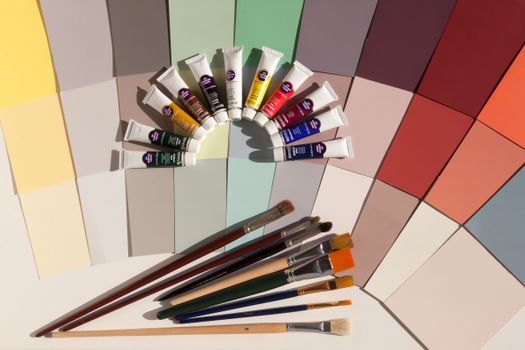 Photo: Pixabay / Pexels
Let's start with color theory. The color wheel is your best friend. It visually represents the relationships between colors. Primary colors (red, blue, yellow) cannot be created by mixing other colors. Secondary colors (orange, green, violet) are created by mixing two primary colors. Tertiary colors are made by mixing a primary and a secondary color. Understanding these relationships allows you to mix any color you desire. Practice mixing: take a dollop of yellow and a dollop of blue, gradually combine them, and watch green emerge. Experiment with the ratios to get different shades of green. Do this for all primary combinations. This hands-on experience is invaluable.
Beyond mixing, consider color temperature (warm vs. cool colors) and saturation (intensity of a color). Warm colors (reds, oranges, yellows) tend to advance, while cool colors (blues, greens, violets) tend to recede. This can be used to create depth and mood in your paintings. Understanding how to desaturate a color by adding its complementary color (opposite on the color wheel) or a neutral gray is also a powerful skill for creating more sophisticated palettes.
Now for techniques. Brushstrokes are fundamental. Try varying the pressure you apply to the brush to create thick or thin lines. Experiment with different parts of the brush – the tip for fine details, the side for broad strokes. Practice laying down flat, even coats of color, then try blending two colors directly on the canvas while they're still wet to create smooth transitions. This is called 'wet-on-wet' blending. For acrylics, you'll need to work relatively quickly due to their fast drying time. You can also layer colors once the previous layer is dry, which is 'wet-on-dry' layering. This allows for building up opacity and creating depth.
Another essential technique is creating textures. You can use less water with your acrylics to create a thicker, more impasto effect, where the brushstrokes are visible. Conversely, adding more water will create thin, translucent washes, similar to watercolor. Experiment with stippling (using the tip of the brush to create dots), scumbling (lightly dragging a dry brush over a dry layer for a broken color effect), and glazing (applying thin, transparent layers of color to alter the underlying tone). Don't be afraid to try unconventional tools like sponges, palette knives, or even your fingers to create interesting effects. The key is to play and explore without judgment. Dedicate specific practice sessions to these techniques on scrap paper or small canvases. This builds muscle memory and familiarity with your materials, making your actual painting projects much more enjoyable and successful.
Unleashing Creativity: Easy Painting Ideas and Projects
Abstract art is an excellent entry point for beginners because it frees you from the pressure of realistic representation. Start by choosing a limited palette – perhaps three colors plus white. Experiment with different brushstrokes, drips, splatters, and layering. Focus on creating interesting textures, shapes, and color combinations. You can explore creating movement with swirling lines or evoke emotion with bold, contrasting colors. The beauty of abstract art is that there's no 'wrong' way to do it, making it incredibly liberating for those just starting out. It's a fantastic way to understand how colors interact and how different applications of paint create different visual effects. Discovering your artistic style often begins with such freeform exploration.
Still life paintings are another classic and highly effective way to learn. Begin with simple objects around your home. A single piece of fruit, a coffee mug, or a simple vase can be perfect subjects. Arrange them under a consistent light source (a lamp or natural window light) to create clear shadows and highlights. Focus on observing basic shapes, values (light and dark areas), and the colors you actually see, rather than what you think they should be. Don't worry about intricate details initially; instead, try to capture the overall form and the play of light and shadow. As you get more comfortable, you can add more objects or introduce more complex lighting.
For those drawn to landscapes, starting with simplified scenes or working from reference photos is ideal. Look for images with clear foreground, middle ground, and background elements. Focus on blocking in large areas of color first – the sky, the ground, large bodies of water, or distant trees. Then, gradually add details. Learning to simplify complex scenes into basic shapes and colors is a crucial skill. Try painting a sunset or sunrise, where the focus is on blending vibrant sky colors. Or a simple tree against a clear sky, concentrating on the texture of the bark and the shape of the foliage. There are countless online tutorials and beginner-friendly landscape painting videos that can provide step-by-step guidance.
Another engaging idea is to create color studies. Instead of painting a complete scene, dedicate a canvas to exploring different color combinations or creating a gradient from one hue to another. This is a targeted way to practice color mixing and blending without the pressure of a finished artwork. Or, try painting a simple pattern, like stripes or polka dots, to practice consistent brushwork and clean lines. Remember, every stroke is a learning opportunity. Embrace the process, celebrate small victories, and don't be afraid to make 'mistakes' – they are often the most valuable teachers in your artistic journey.
Common Beginner Painting Mistakes and How to Avoid Them
Comparison
| Feature | Acrylic Paints (Beginner Best) | Oil Paints (Intermediate) | Watercolor Paints (Challenging for Beginners) |
|---|---|---|---|
| Drying Time | Fast (minutes) | Slow (hours to days) | Fast (seconds to minutes) |
| Cleanup | Water & Soap | Mineral Spirits/Solvents | Water |
| Versatility | High (various surfaces) | High (canvas, wood) | Limited (paper) |
| Opacity | Opaque to Transparent | Opaque to Transparent | Transparent |
| Cost (Student Grade) | Affordable | Moderate | Affordable |
| Ease of Use | ✓ | ✗ | ✗ |
What Our Readers Say
"This guide truly showed me how to start painting for beginners. I was intimidated before, but the clear steps and supply recommendations made it so easy to get started without feeling overwhelmed."
Sarah J. Austin, TX"I've always wanted to paint but never knew where to begin. This article is incredibly helpful, especially the section on basic techniques. I'm already seeing progress in my first few attempts!"
Mark D. Seattle, WA"Following this guide, I finally picked up a brush after years of hesitation. I managed to complete a simple landscape painting that I'm actually proud of! It helped me understand color mixing much better."
Emily R. Miami, FL"Good advice for beginners, particularly on not overspending on supplies. I wish there were a few more specific project ideas, but the emphasis on experimentation was really valuable for me."
David L. Denver, CO"As a busy mom, I needed a straightforward approach to learn how to start painting for beginners. This guide delivered! The quick drying time of acrylics mentioned was a game-changer for my limited free time."
Chloe P. Chicago, ILFrequently Asked Questions
What's the absolute best type of paint for a complete beginner?
I'm not naturally artistic; can I still learn to paint?
How do I choose the right brushes when there are so many options?
What's a reasonable budget for initial painting supplies?
Is it better to take a class or learn to paint on my own?
Who should use 'how to start painting for beginners' resources?
Are there any toxic materials I should be aware of when painting?
What are some emerging trends in beginner painting?
Ready to transform your creative aspirations into tangible art? This guide provides the essential knowledge and encouragement you need on how to start painting for beginners. Pick up your first brush today, embrace the learning process, and discover the joy of bringing your visions to life on canvas.