Unraveling the Rich History of Renaissance Art
history of renaissance art

Unraveling the Rich History of Renaissance Art

Dive into the golden age of creativity, innovation, and humanism that redefined art forever.

Discover the Masterpieces

Key Takeaways

  • ✓ The Renaissance originated in Florence, Italy, in the 14th century.
  • ✓ Humanism was a central philosophical tenet, emphasizing human potential and achievement.
  • ✓ Linear perspective, developed by Brunelleschi, revolutionized painting.
  • ✓ Key artists include Leonardo da Vinci, Michelangelo, Raphael, and Donatello.

How It Works

1
Understand the Precursors

Before diving into the Renaissance, grasp the artistic styles and societal conditions of the late Middle Ages. This context highlights the revolutionary nature of Renaissance innovations.

2
Explore the Early Renaissance

Focus on the foundational artists and techniques emerging in 14th and 15th century Italy. Key developments like perspective and naturalism took root here.

3
Delve into the High Renaissance

Examine the period of peak artistic achievement, characterized by the 'Big Three' – Leonardo, Michelangelo, and Raphael. Understand their individual contributions and collective impact.

4
Recognize Regional Variations and Legacy

Investigate how Renaissance art spread beyond Italy and influenced Northern Europe, as well as its enduring legacy on subsequent art movements and Western culture.

The Genesis of a Golden Age: Early Italian Renaissance
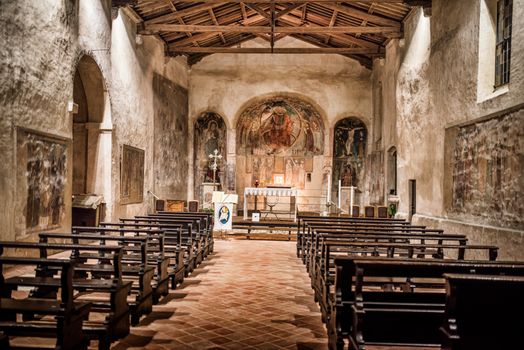
Beautifully preserved chapel interior in Sirmione, Lombardy, showcasing vintage frescoes and wooden architecture. Photo: Piotr Arnoldes / Pexels
The history of Renaissance art begins in the bustling city-states of Italy, particularly Florence, during the 14th century. This period, often called the Proto-Renaissance or Early Renaissance, marked a profound departure from the rigid, symbolic styles of the Byzantine and Gothic eras. Instead, artists began to look back to the classical antiquity of Greece and Rome for inspiration, sparking a 'rebirth' of classical ideals in art, philosophy, and culture. This intellectual movement, known as humanism, placed a renewed emphasis on human beings, their achievements, and their potential, shifting focus from the purely divine to a more balanced view that celebrated both spiritual and earthly existence. This philosophical shift directly influenced artistic expression, encouraging a move towards naturalism and realism. One of the foundational figures in this early period was Giotto di Bondone (c. 1267–1337). Often credited with initiating the revolution, Giotto broke away from the flat, two-dimensional conventions of Byzantine art. His frescoes, such as those in the Scrovegni Chapel, introduced a sense of volume, weight, and emotional depth to figures, making them appear more lifelike and relatable. He experimented with rudimentary forms of perspective, creating more convincing spatial illusions than had been seen in centuries. Following Giotto, the 15th century saw an explosion of innovation. Filippo Brunelleschi (1377–1446), an architect and engineer, is widely credited with rediscovering and formalizing linear perspective, a mathematical system for creating the illusion of depth on a flat surface. This invention was revolutionary, allowing artists to construct highly realistic and believable three-dimensional spaces within their paintings. His contemporary, Donatello (c. 1386–1466), reinvigorated sculpture with his naturalistic and emotionally charged works, most famously his bronze 'David,' the first free-standing nude sculpture since antiquity. Masaccio (1401–1428/29), despite his short life, left an indelible mark on painting. His fresco 'The Holy Trinity' in Santa Maria Novella is a masterful demonstration of linear perspective and anatomical accuracy, showcasing figures with unprecedented solidity and presence. These early masters laid the groundwork, transforming art from a symbolic language into a powerful tool for representing the visible world with unparalleled fidelity and emotional resonance. They set the stage for the artistic titans who would follow, cementing the foundations of what we now recognize as Renaissance art.

The Zenith of Creativity: The High Renaissance Masters
Window with decorative grill, green ivy, and Mona Lisa poster on a blue wall. Photo: Murat Ak / Pexels
The High Renaissance, generally spanning from the late 15th century to the early 16th century, represents the pinnacle of artistic achievement within the history of Renaissance art. This relatively brief but intensely productive period was dominated by three titans: Leonardo da Vinci, Michelangelo Buonarroti, and Raphael Sanzio. Their collective genius elevated art to new heights of technical mastery, emotional expression, and intellectual depth, producing some of the most iconic and enduring works in human history. This era saw the full realization of the principles established in the Early Renaissance, refined and expanded upon with unparalleled skill and vision. Leonardo da Vinci (1452–1519) epitomized the 'Renaissance Man' – a polymath with insatiable curiosity. His contributions to art were groundbreaking, characterized by his scientific observation, anatomical precision, and innovative use of sfumato, a technique of subtly blending colors or tones to create soft, hazy transitions between areas, famously seen in the 'Mona Lisa.' His 'Last Supper' is a masterpiece of composition, psychology, and dramatic tension, capturing the moment of revelation with profound emotional insight. Leonardo’s meticulous studies of human anatomy and natural phenomena informed his artistic practice, lending his figures an unprecedented sense of vitality and realism. Michelangelo Buonarroti (1475–1564), a master sculptor, painter, architect, and poet, possessed a powerful, often turbulent genius. His sculptures, such as 'David' (a different, more heroic depiction than Donatello's) and 'Pietà,' demonstrate a profound understanding of human form and emotion, imbued with a heroic grandeur. His most monumental achievement, however, is arguably the Sistine Chapel ceiling, a vast fresco cycle depicting scenes from Genesis. This colossal undertaking showcases his extraordinary ability to render complex narratives and dynamic figures on an immense scale, combining anatomical accuracy with spiritual profundity. Raphael Sanzio (1483–1520), though dying young, left an astonishing legacy of harmonious and graceful works. Known for his clarity, richness of color, and serene compositions, Raphael excelled in depicting the Madonna and Child, as well as large-scale narrative frescoes. His 'School of Athens' in the Vatican's Apostolic Palace is a quintessential High Renaissance work, bringing together ancient philosophers and scientists in a grand, perspectival space, embodying the humanistic ideals of the era. The balanced composition, idealized forms, and intellectual depth of his works represent the epitome of Renaissance classical beauty. Together, these three masters defined the High Renaissance, pushing the boundaries of what art could achieve and setting standards that would influence generations of artists.

Beyond Italy: Northern Renaissance and Enduring Legacy
Young woman with red hair stands in art museum, surrounded by historical paintings. Photo: Neda Kekil / Pexels
While the Italian Renaissance was flourishing, a distinct yet parallel artistic movement was developing in Northern Europe, particularly in Flanders, the Netherlands, and Germany. This Northern Renaissance, while sharing some humanistic ideals, often retained stronger ties to Gothic traditions and differed in its artistic focus and techniques. Unlike the Italian emphasis on idealized forms and linear perspective, Northern Renaissance artists prioritized meticulous detail, vibrant color, and an almost hyper-realistic rendering of everyday life and religious symbolism. The use of oil paint, perfected by Northern artists, allowed for richer colors, deeper shadows, and incredibly fine details, which was a significant innovation that later influenced Italian painters. Key figures of the Northern Renaissance include Jan van Eyck (c. 1390–1441), whose 'Arnolfini Portrait' is a testament to his mastery of oil painting, intricate symbolism, and realistic depiction of textures and light. His ability to capture minute details, from reflections in a mirror to individual hairs, was unparalleled. Rogier van der Weyden (c. 1399–1464) brought intense emotional expression and dramatic compositions to his religious works, such as 'The Descent from the Cross.' Later, artists like Albrecht Dürer (1471–1528) in Germany, a master printmaker and painter, absorbed Italian Renaissance principles during his travels but infused them with a distinctly Northern sensibility, producing works of immense intellectual depth and technical brilliance. His engravings, like 'Melencolia I,' demonstrate his profound understanding of composition and allegory. Hieronymus Bosch (c. 1450–1516) stands out for his unique and often surreal visions, particularly in 'The Garden of Earthly Delights,' which explores moral and religious themes through fantastical imagery. The history of Renaissance art didn't end with the High Renaissance; its influence reverberated throughout Europe and across subsequent centuries. The principles of perspective, anatomy, naturalism, and humanism established during this period became the bedrock of Western art education and practice for hundreds of years. The works of the Renaissance masters continue to inspire awe and study, shaping our understanding of beauty, proportion, and the human condition. Elements of Renaissance art can be seen in later movements like Baroque and Neoclassicism, and even in contemporary art, artists often reference or reinterpret these classical forms and ideas. The lasting legacy of the Renaissance is not just in the individual masterpieces, but in its fundamental reorientation of art's purpose and potential, establishing it as a powerful medium for intellectual inquiry, emotional expression, and the celebration of human achievement. Understanding this era is crucial for anyone interested in the broader evolution of art and culture.

Navigating the Nuances: Key Characteristics and Common Misconceptions
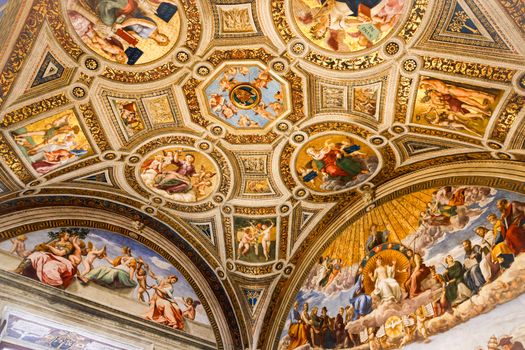
Intricately painted frescoes adorn the Vatican Museum ceilings showcasing Roman artistry. Photo: Magda Ehlers / Pexels
To truly appreciate the history of Renaissance art, it's essential to understand its defining characteristics and dispel some common misconceptions. Far from being a monolithic style, the Renaissance encompassed a range of approaches, yet shared core principles that set it apart. **Key Characteristics:** * **Humanism:** A philosophical worldview that emphasized human agency, dignity, and potential, often drawing inspiration from classical Greek and Roman thought. This led to a greater focus on secular subjects and realistic human representation. * **Naturalism and Realism:** Artists sought to depict the world as it truly appeared, paying close attention to anatomy, light, shadow (chiaroscuro), and atmospheric effects (sfumato). This was a significant shift from the more symbolic and stylized art of the Middle Ages. * **Linear Perspective:** The mathematical system for creating the illusion of depth on a two-dimensional surface, making paintings appear as windows into another world. This was a hallmark of Italian Renaissance painting. * **Classical Influence:** A deliberate revival of classical forms, themes, and motifs from ancient Greece and Rome, evident in architecture, sculpture, and painting. * **Individualism:** A growing recognition of the artist as a genius and innovator, rather than merely a skilled craftsman. This led to artists signing their works and achieving celebrity status. * **Proportion and Harmony:** A strong emphasis on balance, symmetry, and ideal proportions, often derived from classical aesthetic theories. **Common Misconceptions:** * **The Renaissance was a sudden, complete break from the Middle Ages:** In reality, it was a gradual evolution, with elements of medieval art persisting and influencing early Renaissance works. It was more of a reorientation than a complete severance. * **All Renaissance art is religious:** While religious themes remained prevalent, especially in Italy, the Renaissance also saw a significant increase in secular portraiture, mythological scenes, and genre paintings, reflecting the humanistic shift. * **The Northern and Italian Renaissances were identical:** While interconnected, they developed distinct characteristics. Northern art often focused on minute detail, symbolism, and the use of oil paint, while Italian art prioritized idealized forms, monumental scale, and linear perspective. * **Only 'great masters' created art:** While figures like Leonardo and Michelangelo dominate our view, countless workshops produced art for a wide range of patrons, from wealthy merchants to local churches, showcasing a vibrant and diverse artistic ecosystem. Ignoring these broader contributions would be an incomplete understanding of the era. Understanding these nuances provides a richer, more accurate picture of this transformative period in art history.

Comparison

FeatureItalian RenaissanceNorthern RenaissanceMedieval Art
Primary FocusIdealized forms, classical themes, humanismNaturalism, symbolism, everyday lifeSymbolic, religious narratives, spiritual
Key MediumsFresco, tempera, oil (later)Oil paint (dominant), temperaFresco, tempera, stained glass
PerspectiveLinear perspective (developed)Empirical perspective, detailed backgroundsFlat, symbolic, hierarchical scale
AnatomyHighly accurate, idealizedDetailed, realistic but less idealizedStylized, often elongated

What Readers Say

"This article on the history of Renaissance art completely transformed my understanding. The breakdown of early to high Renaissance, and even the Northern influences, was incredibly clear and engaging. I feel much more confident discussing this period now."

Sophia R. · New York, NY

"As an art history student, I found this resource invaluable. The depth of explanation for key concepts like humanism and linear perspective, combined with specific artist examples, made complex ideas very accessible. A truly premium piece of content."

Marcus L. · Chicago, IL

"I always struggled to differentiate between Italian and Northern Renaissance art, but this article's comparison table and detailed sections cleared everything up. My latest art history essay scored an A, thanks to the insights provided here!"

Elena P. · San Francisco, CA

"A very comprehensive overview, though I would have loved to see a bit more on the architectural innovations of the period. Nevertheless, the content on painting and sculpture was exceptionally well-written and informative."

David W. · Boston, MA

"I'm just a casual art enthusiast, but this deep dive into the history of Renaissance art was captivating. It made me want to visit every museum mentioned and see these masterpieces in person. Fantastic storytelling!"

Chloe K. · Austin, TX

Frequently Asked Questions

What are the three main phases of the history of Renaissance art?

The history of Renaissance art is typically divided into three main phases: the Early Renaissance (roughly 1400-1490s), the High Renaissance (roughly 1490s-1527), and the Late Renaissance/Mannerism (roughly 1520s-1600). Each phase saw distinct artistic developments and shifts in style, though with continuous foundational principles.

Was Renaissance art only religious?

No, while religious themes were certainly prominent, Renaissance art also saw a significant rise in secular subjects. Portraiture, mythological scenes, historical events, and even genre paintings depicting everyday life became increasingly common, reflecting the humanistic shift towards valuing earthly existence and individual achievement.

How did linear perspective change art during the Renaissance?

Linear perspective, rediscovered by Brunelleschi and formalized by artists like Masaccio, revolutionized art by providing a scientific method to create the illusion of three-dimensional depth on a flat surface. This allowed artists to construct realistic and believable spatial environments, making their paintings appear more lifelike and engaging, and was a cornerstone of Renaissance naturalism.

Why is the Renaissance considered a 'rebirth'?

The term 'Renaissance' literally means 'rebirth' in French. It refers to a period of renewed interest in and revival of classical Greek and Roman art, philosophy, literature, and culture after the perceived 'dark ages' of the medieval period. Artists and scholars looked back to antiquity for inspiration, leading to a flourishing of creativity and innovation.

How does Northern Renaissance art differ from Italian Renaissance art?

Northern Renaissance art, while contemporary, often differed from Italian Renaissance art in its focus. Northern artists typically prioritized meticulous detail, vibrant colors achieved through oil paint, and often incorporated complex symbolism and realistic depictions of everyday life. Italian Renaissance art, conversely, emphasized idealized forms, monumental scale, linear perspective, and classical themes.

Who should learn about the history of Renaissance art?

Anyone with an interest in art, history, culture, or the development of Western civilization should delve into the history of Renaissance art. It's essential for students, art enthusiasts, travelers planning trips to Italy or Northern Europe, and anyone seeking to understand the foundations of many subsequent artistic movements.

What was the role of patrons in Renaissance art?

Patrons, such as wealthy families (like the Medici), the Church, and powerful rulers, played a crucial role in the creation of Renaissance art. They commissioned artworks, funded artists' workshops, and provided the financial stability that allowed for artistic innovation and the production of monumental masterpieces. Their tastes and political agendas often influenced the subjects and styles of the art produced.

What was Mannerism, and how did it relate to the Renaissance?

Mannerism was an artistic style that emerged in the late High Renaissance (around the 1520s) and served as a transition to the Baroque period. It was characterized by an exaggeration of the ideals of the High Renaissance, often featuring elongated forms, theatrical compositions, artificial colors, and complex, often unsettling, emotional expressions. It moved away from the harmony and balance of its predecessors.

Embark on your own journey through the history of Renaissance art. Discover the masterpieces, understand the groundbreaking innovations, and let the beauty and intellect of this transformative era inspire you. Start exploring today and uncover the enduring legacy of human creativity.

Topics: history of renaissance artrenaissance artistsitalian renaissancerenaissance art characteristicsartistic rebirth
Leo List

DK Escorts LU Escorts AT Escorts SE Escorts FI Escorts CH Escorts DE Escorts HR Escorts IE Escorts GR Escorts CZ Escorts NO Escorts BE Escorts FR Escorts SI Escorts IL Escorts NL Escorts PL Escorts HU Escorts ES Escorts IT Escorts PT Escorts SK Escorts RO Escorts ZA Escorts UY Escorts US Escorts UK Escorts NZ Escorts AU Escorts
Brampton weed
Adultwork EstrelaBet Vai de Bet R7 Bet Betão Galera Bet Rainbet Bet9ja Shop SportyBet BetKing Sisal Loto Foot Hollywoodbets YesPlay Odibets RushBet Jugabet BetWarrior BetCity MSport betPawa Fortebet