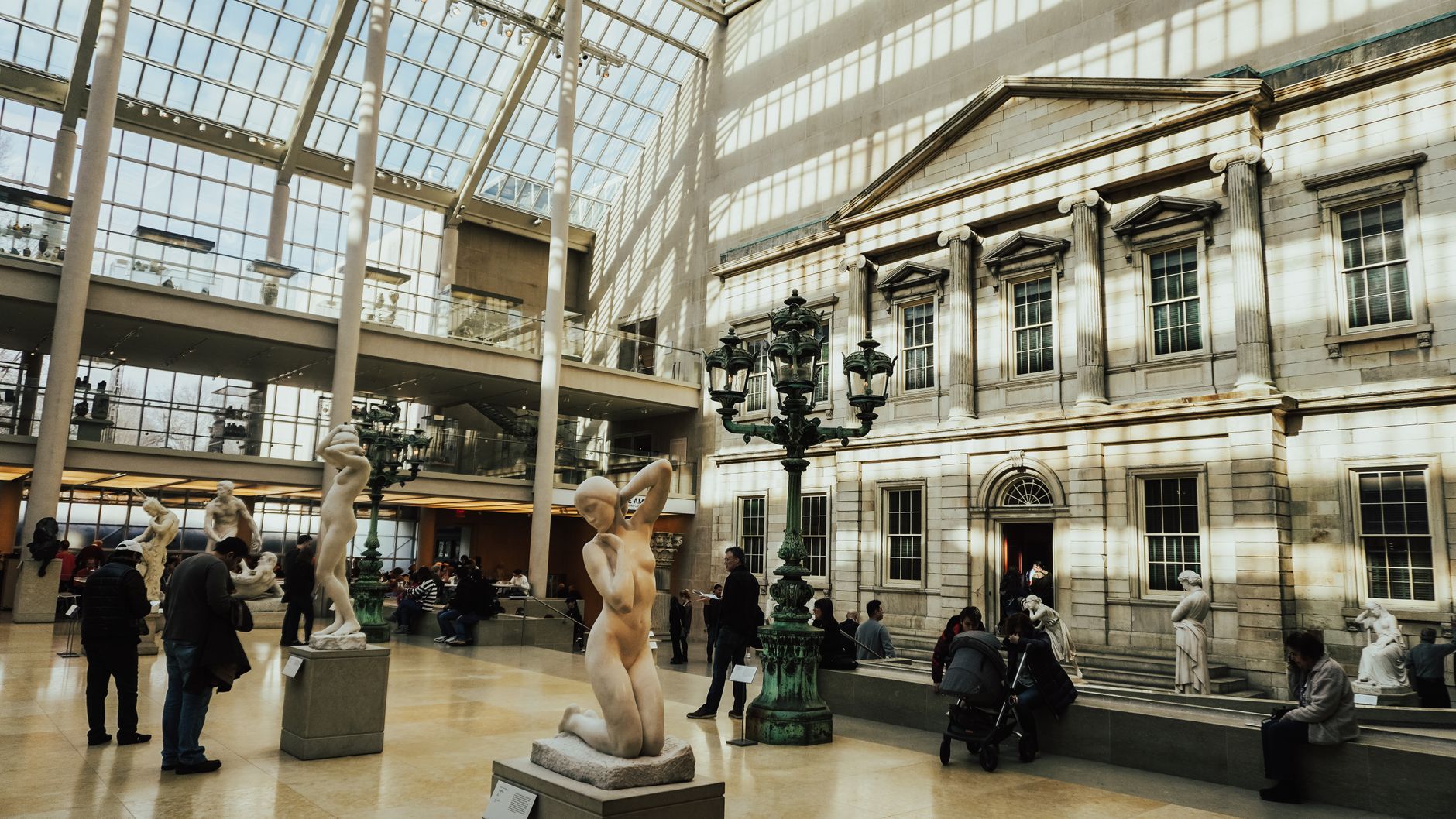
10 Famous American Artists to Know: Unveiling Creative Legacies
famous American artists to know

10 Famous American Artists to Know: Unveiling Creative Legacies

Dive into the lives and works of pivotal American artists who shaped global art movements and left indelible marks.

Explore Their Masterpieces

Key Takeaways

  • ✓ American art is a tapestry woven from diverse cultural influences and groundbreaking movements.
  • ✓ Many famous American artists pioneered new techniques and challenged traditional artistic norms.
  • ✓ Their works often reflect the social, political, and cultural landscapes of their times.
  • ✓ Understanding these artists provides insight into America's evolving identity and artistic contributions.

How It Works

1
Identify Key Periods

American art spans centuries, from colonial portraiture to contemporary installations. Recognizing major periods helps contextualize artists' contributions and innovations.

2
Explore Influential Movements

From Abstract Expressionism to Pop Art, American artists were at the forefront of global movements. Understanding these movements illuminates the shared philosophies and stylistic tendencies.

3
Delve into Biographies

The personal stories, struggles, and inspirations of artists often profoundly impact their work. Learning about their lives provides deeper appreciation for their creative output.

4
Analyze Iconic Works

Engage directly with the masterpieces that defined these artists' careers. Examine techniques, symbolism, and historical context to fully grasp their significance.

Pioneers of American Modernism: Shaping a New Visual Language
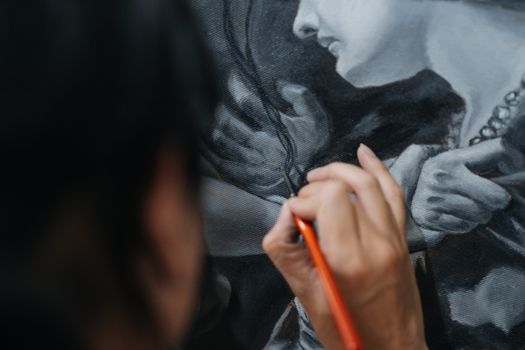
Close-up of artist carefully painting a detailed portrait using fine brushes. Photo: Huy Nguyễn / Pexels
The early 20th century marked a pivotal shift in American art, as artists began to forge a distinctive national identity, moving away from European traditions. This era, often termed American Modernism, saw the emergence of figures who dared to experiment with form, color, and subject matter, reflecting the rapid industrialization, urbanization, and cultural shifts of the time. Among these trailblazers, Georgia O'Keeffe stands out with her iconic close-up paintings of flowers, skyscrapers, and New Mexico landscapes. Her ability to distill natural forms into abstract compositions, emphasizing their sensuous curves and vibrant hues, created a unique visual vocabulary. O'Keeffe’s work often explored themes of nature, spirituality, and the female form, inviting viewers to look at familiar objects with renewed intensity and appreciation. Her precisionist approach, combined with a deep emotional resonance, solidified her place as a foundational figure in American art. Discover more about modern art movements. Another paramount figure in this period was Edward Hopper, whose hauntingly melancholic scenes of urban and rural America captured the sense of isolation and introspection prevalent in post-World War I society. Hopper's meticulous use of light and shadow, combined with his stark architectural compositions and solitary figures, created an atmosphere of quiet drama and psychological depth. Paintings like 'Nighthawks' and 'Gas' have become quintessential representations of American life, evoking a profound sense of loneliness and contemplation. His work, while seemingly realistic, often possessed an underlying abstraction, focusing on the emotional landscape rather than mere photographic representation. Hopper’s influence extended far beyond painting, touching cinema and literature with his distinct aesthetic. Grant Wood, a key proponent of American Regionalism, contributed significantly to the modernist landscape by depicting idealized scenes of rural American life, often with a touch of satirical undertone. His most famous work, 'American Gothic,' has become one of the most recognized and parodied paintings in art history, symbolizing the resilience and stoicism of the American Midwest. Wood's meticulous detail, crisp lines, and often stoic figures celebrated the enduring spirit of small-town America while also subtly critiquing its provincialism. These artists, alongside others like Charles Sheeler and Stuart Davis, collectively redefined what American art could be, moving it towards a more introspective and uniquely American expression, laying the groundwork for subsequent generations of artists to build upon and challenge.

The Abstract Expressionists: Redefining Art's Emotional Core
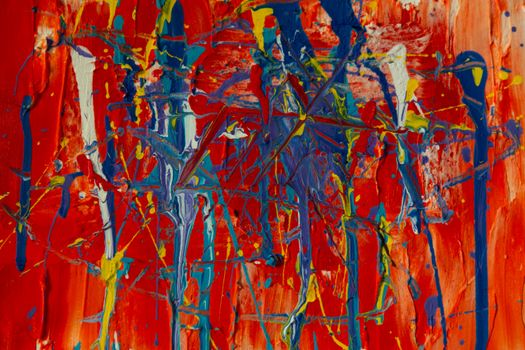
Dynamic abstract painting with bold acrylic colors on canvas. Photo: Steve A Johnson / Pexels
Following the tumultuous years of World War II, a revolutionary art movement emerged from New York City, forever altering the course of global art: Abstract Expressionism. This movement, characterized by its emphasis on spontaneous, gestural, and non-representational forms, sought to express profound emotions and universal truths through the act of painting itself. Jackson Pollock, often dubbed 'Jack the Dripper,' is arguably the most famous figure of this movement. His 'drip paintings,' created by pouring, dripping, and splattering paint onto canvases laid on the floor, were not merely about the finished product but about the energetic process of creation. Pollock’s method, which he called 'action painting,' transformed the canvas into an arena for raw psychological expression, breaking traditional barriers between artist and artwork. His monumental scale and radical technique catapulted American art onto the international stage, challenging European dominance and establishing New York as the new epicenter of the art world. Mark Rothko, another titan of Abstract Expressionism, pursued a different, yet equally profound, path. His iconic 'color field' paintings, characterized by large, luminous rectangular fields of color, aimed to evoke deep spiritual and emotional experiences in the viewer. Rothko believed that art should transcend mere aesthetics and directly communicate with the soul, creating a sense of awe, tragedy, or ecstasy. His meticulous layering of thin washes of paint created glowing, ethereal surfaces that seem to pulsate with inner light, inviting prolonged contemplation and introspection. Rothko's work was less about gesture and more about the immersive power of color and its ability to convey universal human feelings. Willem de Kooning, a Dutch-American artist, bridged the gap between abstraction and figuration within the movement. His powerful, often violent, brushstrokes and distorted figures, particularly in his 'Woman' series, conveyed a raw energy and a complex interplay of aggression and tenderness. De Kooning’s work wrestled with the human condition, incorporating elements of Cubism and Surrealism into his highly personal and expressive style. His dynamic compositions and vibrant palette showcased a relentless exploration of form and emotion, making him a crucial figure in the diverse landscape of Abstract Expressionism. Together, these artists pushed the boundaries of what art could be, emphasizing individualism, subjective experience, and the raw power of artistic expression, leaving an indelible mark on subsequent generations and cementing America's place in the avant-garde.

Pop Art and Beyond: Challenging Conventions and Reflecting Culture
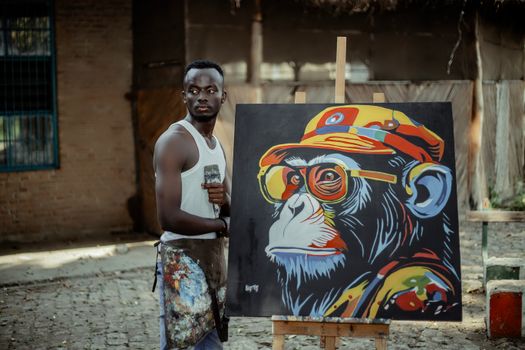
Artist standing with colorful chimpanzee artwork in urban outdoor setting. Photo: Chris wade NTEZICIMPA / Pexels
As the mid-20th century progressed, a new generation of artists emerged, reacting to the intense introspection of Abstract Expressionism and turning their gaze outward towards consumer culture, mass media, and everyday objects. This movement, known as Pop Art, originated in Britain but found its most influential and vibrant expression in America. Andy Warhol, arguably the most recognizable figure of Pop Art, revolutionized the art world by elevating ordinary objects and celebrity portraits to the status of high art. His iconic silkscreen prints of Campbell's Soup Cans, Coca-Cola bottles, and famous personalities like Marilyn Monroe and Elvis Presley blurred the lines between commercial art and fine art, challenging traditional notions of originality and artistic value. Warhol's Factory, his New York studio, became a hub of creativity and counterculture, producing not only art but also films, music, and performance art. His work captured the zeitgeist of a consumer-driven society, reflecting on themes of fame, mass production, and the fleeting nature of modern life. Explore the impact of Pop Art on contemporary design. Roy Lichtenstein, another prominent Pop artist, drew inspiration from comic books, transforming their panels into large-scale paintings with his signature Ben-Day dots and bold outlines. His works, such as 'Whaam!' and 'Drowning Girl,' meticulously recreated the aesthetic of commercial printing, questioning the distinction between 'low' and 'high' culture. Lichtenstein's art was both a celebration and a critique of popular imagery, using irony and wit to comment on American society's pervasive visual language. His mechanical reproduction techniques and appropriation of existing images profoundly influenced conceptual art and postmodernism. Beyond Pop Art, other significant American artists continued to challenge and innovate. Jean-Michel Basquiat, a self-taught artist who rose to prominence in the 1980s, fused street art, graffiti, and Neo-Expressionism to create raw, powerful works that addressed themes of race, class, and social justice. His energetic canvases, filled with symbols, text, and childlike drawings, offered a poignant commentary on the complexities of urban life and the African American experience. Basquiat’s meteoric rise and tragic early death solidified his legend, leaving behind a powerful legacy that continues to resonate. These artists, from Warhol's cool detachment to Basquiat's fiery intensity, redefined the role of art in society, making it more accessible, provocative, and deeply intertwined with the cultural fabric of America.

Key Takeaways for Appreciating American Art

Art gallery hallway with framed artworks and visitors seated inside, under warm lighting. Photo: ProtSilver Chen / Pexels
Understanding the rich tapestry of American art involves recognizing the diverse voices and groundbreaking innovations that have shaped its evolution. To truly appreciate the famous American artists to know, consider these key takeaways: * **Context is King:** Always consider the historical, social, and political context in which an artist worked. The Great Depression profoundly influenced Regionalist painters like Grant Wood, just as the post-war boom fueled the rise of Abstract Expressionism and Pop Art. Art is a reflection of its time, and understanding the era illuminates the artist's message. * **Look Beyond the Canvas:** Many American artists were not just painters; they were thinkers, activists, and innovators. Jackson Pollock's 'action painting' was a philosophical statement as much as a technique. Andy Warhol's 'Factory' was a multidisciplinary cultural hub. Engaging with their broader creative output and philosophies enriches your appreciation. * **Embrace Diversity:** American art is incredibly diverse, reflecting the nation's multicultural heritage. From the Indigenous art forms that predate European settlement to the vibrant expressions of African American and Latin American artists, the landscape is rich with varied perspectives and styles. Seek out artists who represent different backgrounds and experiences to gain a comprehensive understanding. * **Challenge Your Perceptions:** Many famous American artists, especially those in the modernist and contemporary periods, deliberately set out to challenge established norms and viewer expectations. Don't be afraid to question what you see, to feel uncomfortable, or to find beauty in the unconventional. Art is often about pushing boundaries. * **Visit Museums and Galleries:** There's no substitute for experiencing art firsthand. Museums like the Museum of Modern Art (MoMA) in New York, the Art Institute of Chicago, and the National Gallery of Art in Washington D.C. house extensive collections of American masterpieces. Seeing the scale, texture, and true colors of a work in person offers an entirely different level of engagement. By adopting these approaches, you can move beyond simply recognizing names and instead develop a deeper, more meaningful connection with the extraordinary legacies of America's most celebrated artists. Each artist offers a unique window into the American experience, making their works not just beautiful objects, but vital cultural documents.

Comparison

ArtistKey MovementSignature StyleMajor ThemesImpact
Georgia O'KeeffeAmerican ModernismPrecisionist, abstract floral/landscapeNature, sensuality, spiritualityPioneered American Modernism, unique female voice
Edward HopperAmerican RealismMelancholic urban/rural scenesIsolation, contemplation, American lifeMaster of light and shadow, psychological depth
Jackson PollockAbstract ExpressionismAction painting, drip techniqueRaw emotion, subconscious, processRevolutionized painting, shifted art world to NYC
Mark RothkoAbstract ExpressionismColor field paintingSpirituality, human emotion, sublimeEvoked deep emotional responses through color
Andy WarholPop ArtSilkscreen, commercial imageryConsumerism, fame, mass productionBlurred lines between art and commerce, cultural icon
Jean-Michel BasquiatNeo-ExpressionismGraffiti, raw, symbolicRace, class, identity, urban lifeInfluential voice for social commentary, art market disruptor

What Readers Say

"This article was incredibly helpful for understanding famous American artists to know! The breakdown of movements and key figures made it so easy to follow and appreciate their contributions."

Sarah J. · Boston, MA

"As an art enthusiast, I found this a fantastic overview of famous American artists to know. The insights into each artist's unique style and impact were truly illuminating."

David L. · Los Angeles, CA

"I used this guide to plan my next museum visit, focusing on the famous American artists to know mentioned. It made my experience much richer and more informed, I spent hours engaging with their work."

Maria K. · Chicago, IL

"A very comprehensive list of famous American artists to know. While it covered many greats, I would have loved to see a bit more on contemporary Indigenous artists, but still a brilliant resource."

Ethan P. · Austin, TX

"Even living in a city with so many galleries, this piece on famous American artists to know opened my eyes to artists I hadn't fully appreciated. It's a must-read for anyone interested in American art."

Jessica R. · New York, NY

Frequently Asked Questions

Who are some of the most famous American artists to know from the 20th century?

The 20th century was a golden age for American art. Key figures include Georgia O'Keeffe (American Modernism), Edward Hopper (Realism), Jackson Pollock and Mark Rothko (Abstract Expressionism), and Andy Warhol (Pop Art). These artists pioneered new styles and significantly influenced global art movements, defining a uniquely American aesthetic.

Is it difficult to start appreciating modern and contemporary famous American artists to know?

Not at all! While modern and contemporary art can sometimes feel intimidating, the key is to approach it with an open mind and a willingness to understand the artist's intent and context. Many famous American artists from these periods sought to challenge conventions and reflect societal changes, making their work highly relevant and engaging once you understand their motivations.

How can I learn more about the techniques used by famous American artists to know?

To delve deeper into techniques, consider visiting art museums with American collections, as many offer detailed wall texts and audio guides. Online resources like museum websites, art history courses, and documentaries often provide insights into artists' processes, from Pollock's 'action painting' to Warhol's silkscreen methods. Hands-on art classes can also provide a practical understanding.

Are works by famous American artists to know generally expensive?

Works by highly famous American artists can indeed command very high prices at auction, often reaching millions of dollars, especially for iconic pieces. However, appreciating their art doesn't require ownership. Many museums offer free or discounted admission, and prints or reproductions are widely available, making their art accessible to everyone.

How do American artists compare to European masters?

American artists initially drew heavily from European traditions but progressively developed distinct styles and movements that challenged European dominance, particularly from the mid-20th century onwards. While European masters laid foundational groundwork, famous American artists to know innovated in areas like Abstract Expressionism and Pop Art, establishing unique contributions that are now considered equally pivotal in global art history.

Who should read this guide on famous American artists to know?

This guide is ideal for anyone interested in art, from casual enthusiasts looking to broaden their knowledge to students seeking a foundational understanding of American art history. It's perfect for those planning museum visits, wanting to impress at art-related conversations, or simply curious about the creative minds that shaped American culture.

Is there a risk of misinterpreting an artist's message in their work?

Art interpretation is subjective, and multiple valid interpretations can exist. While artists often have specific intentions, viewers bring their own experiences and perspectives, leading to diverse understandings. The 'risk' isn't in misinterpretation, but in not engaging critically or contextually. Learning about the artist's background and the era helps inform a more robust interpretation.

What are the future trends in American art, building on these famous artists?

Future trends in American art continue to build on the legacy of innovation and social commentary. Expect further exploration of digital art, AI in creativity, and virtual reality experiences. Themes of identity, climate change, social justice, and globalization will remain prominent, often expressed through interdisciplinary approaches and community-engaged practices, pushing boundaries just as past masters did.

Embark on your journey through American art history today. Explore the legacies of these famous American artists to know and let their creativity inspire your own appreciation for the diverse and dynamic world of art.

Topics: famous American artists to knowiconic US paintersAmerican art historyinfluential American artistsgreat American artists
Leo List
Brampton weed
Adultwork EstrelaBet Vai de Bet R7 Bet Betão Galera Bet Rainbet Bet9ja Shop SportyBet BetKing Sisal Loto Foot Hollywoodbets YesPlay Odibets RushBet Jugabet BetWarrior BetCity MSport betPawa Fortebet