The Best Watercolor Paint Sets for Every Artist
best watercolor paint sets

The Best Watercolor Paint Sets for Every Artist

Unleash your creativity with our expertly curated guide to the top watercolor paint sets, ensuring vibrant results and lasting quality.

Find Your Perfect Set

Key Takeaways

  • ✓ Artist-grade watercolors offer superior pigment concentration and lightfastness compared to student-grade.
  • ✓ Pan sets are convenient for travel and sketching, while tube paints provide intense color and are ideal for larger washes.
  • ✓ Lightfastness ratings (e.g., ASTM I or II) indicate how resistant a pigment is to fading over time.
  • ✓ A good basic set should include primary colors (red, yellow, blue) and essential secondary colors (green, orange, purple) for mixing versatility.

How It Works

1
Identify Your Skill Level

Determine if you're a beginner, student, or professional artist. This helps narrow down choices between student-grade and artist-grade sets.

2
Consider Your Medium Preference

Decide between pan sets (convenient, portable) or tube paints (intense color, larger washes). Some sets offer a combination of both.

3
Evaluate Pigment Quality & Lightfastness

Look for sets with high pigment load for vibrant colors and good lightfastness ratings to ensure your artwork endures over time.

4
Balance Cost and Value

While higher-priced sets often offer superior quality, there are excellent mid-range options. Choose a set that fits your budget without compromising too much on essential features.

Understanding Watercolor Paint Grades: Student vs. Artist Quality
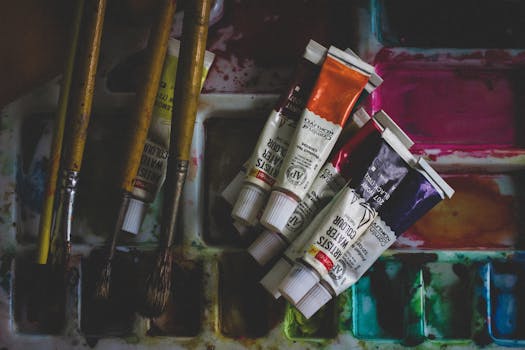
Detailed close-up of watercolor paints and brushes on a colorful palette, perfect for artistic themes. Photo: Rahul Pandit / Pexels
Navigating the world of watercolor paints can initially feel overwhelming, especially with the multitude of options available. A fundamental distinction that every aspiring and seasoned artist should understand is the difference between student-grade and artist-grade watercolor paints. This distinction is crucial as it directly impacts your painting experience, the vibrancy of your artwork, and its longevity. Student-grade watercolors are typically formulated with a lower concentration of pigment and a higher proportion of binders and fillers. This makes them more affordable and an excellent starting point for beginners or for those practicing new techniques without a significant financial investment. While they might offer a good range of colors, their hues may appear less intense, and their lightfastness—the ability of a pigment to resist fading when exposed to light—is generally lower. This means that artwork created with student-grade paints might fade over time, especially if exposed to direct sunlight. For learning fundamental techniques, experimenting with color mixing, or creating studies, student-grade sets are perfectly adequate. They allow you to get a feel for the medium without the pressure of wasting expensive materials. However, as your skills develop and you begin to create pieces intended for display or sale, you will likely find their limitations apparent. Artist-grade, or professional-grade, watercolors, on the other hand, boast a significantly higher concentration of pure pigment and use fewer fillers. This results in incredibly vibrant, rich, and transparent colors that glow on the paper. The pigments are often finely milled, allowing for smoother application and better solubility. A key advantage of artist-grade paints is their superior lightfastness, often rated using standards like ASTM (American Society for Testing and Materials). Paints rated ASTM I or II are considered permanent and highly resistant to fading, ensuring your artwork remains true to color for decades. While artist-grade sets come with a higher price tag, they offer unparalleled quality, better color mixing capabilities, and a broader range of unique pigments. Investing in artist-grade paints is a commitment to the quality and longevity of your work, providing a more satisfying and expressive painting experience. Many artists choose to start with student-grade paints and gradually upgrade to artist-grade as their proficiency grows, perhaps even mixing the two for different purposes. Understanding this fundamental difference empowers you to make informed decisions about your paint choices, aligning them with your artistic goals and budget. For more insights into artistic materials, check out our guide on essential art supplies for beginners.

Pan vs. Tube Watercolors: Which Format is Right for You?
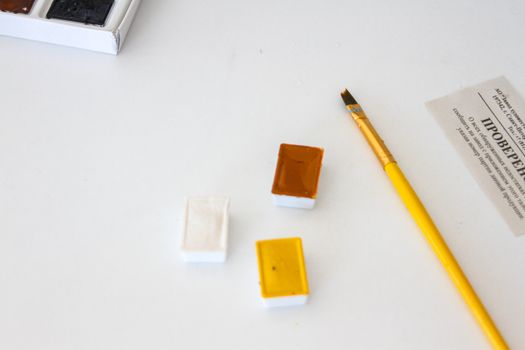
A close-up of watercolor pans and a brush on a white table, ideal for artists. Photo: Feyza Tuğba / Pexels
When selecting your best watercolor paint sets, one of the most practical decisions you'll face is choosing between pan watercolors and tube watercolors. Both formats offer distinct advantages and are suited for different painting styles and situations. Understanding their characteristics will help you pick the right format for your artistic journey. Pan watercolors, often sold in compact sets with individual solid cakes of paint, are renowned for their portability and convenience. They are activated by simply adding a drop of water with a brush, making them ideal for plein air painting, sketching on the go, or classroom use. The solid nature of the paint means there's less mess, and they are generally very economical, as a little paint goes a long way. Pan sets are excellent for building up layers of transparent washes, creating delicate glazes, and for detailed work where precise control over the amount of water is key. They typically dry quickly on the palette, reducing the risk of accidental mixing when not in use. However, a potential drawback of pan sets is that achieving very intense, saturated colors for large areas can be more challenging and time-consuming, as you need to repeatedly re-wet and load your brush. They are also less ideal for very large washes where a consistent, strong color is desired across a broad area. Tube watercolors, conversely, come in a semi-liquid, highly concentrated form. They offer immediate access to vibrant, intense color straight from the tube. This makes them perfect for creating rich, saturated washes, covering large areas quickly, and for artists who prefer a more fluid and expressive style. Because of their high pigment load, a small squeeze of tube paint can yield a significant amount of color, which can then be diluted as needed. Tube paints are often favored by professional artists for their versatility and the depth of color they provide. They can be squeezed directly onto a palette, mixed with water, and then allowed to dry in the palette wells for later re-wetting, much like pans. The main considerations with tube paints are their initial cost, which can be higher per unit, and the potential for waste if too much paint is squeezed out. They also require a separate palette, and transportation can be slightly less convenient than a self-contained pan set. Many artists find a balance by using both formats: pan sets for travel and sketching, and tube paints for studio work or when they need maximum color intensity. Some even fill empty pan wells with tube paints, letting them dry and then re-wetting them as needed. The choice ultimately depends on your preferred working method, the scale of your projects, and your need for portability versus immediate color intensity.

Key Features to Look for in the Best Watercolor Paint Sets
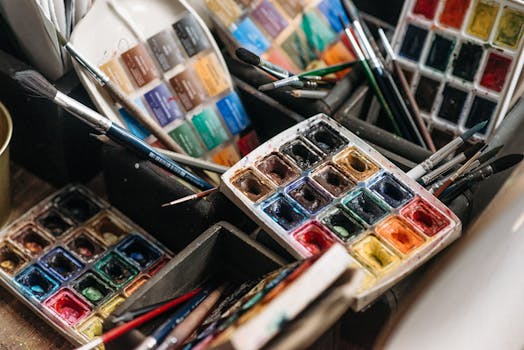
A colorful array of watercolor paints and brushes perfect for creative art projects. Photo: Pavel Danilyuk / Pexels
Selecting the best watercolor paint sets goes beyond simply choosing between pans and tubes or student versus artist grades. Several other critical features can significantly impact your artistic process and the final outcome of your work. Understanding these elements will empower you to make an informed decision that aligns with your specific needs and artistic aspirations. Firstly, consider the pigment selection within the set. A well-rounded beginner set should include primary colors (red, yellow, blue), essential secondary colors (green, orange, purple), and perhaps an earth tone or two. For more advanced artists, a broader palette with single-pigment colors is often preferred, as these offer cleaner mixes and a wider range of hues. Look for sets that clearly list the pigments used, often indicated by color index numbers (e.g., PB29 for Ultramarine Blue, PY42 for Yellow Ochre). This transparency is a hallmark of quality and helps you understand the properties of each color. Secondly, lightfastness is paramount, especially if you intend for your artwork to last. Lightfastness refers to a pigment's resistance to fading when exposed to light over time. Professional-grade paints typically provide lightfastness ratings, often using the ASTM D4302 standard (I for Excellent, II for Very Good, III for Fair). Always prioritize paints with ratings of I or II for pieces you wish to preserve. While student-grade paints may not always list these ratings, reputable brands will still offer decent lightfastness within their student lines. Thirdly, transparency and granulation are important aesthetic properties. Watercolors are celebrated for their transparency, allowing light to reflect off the paper through the pigment layers, creating a luminous effect. Granulating colors contain pigments that settle into the paper's texture, creating a beautiful, subtle speckled effect, while non-granulating colors lay down a smooth, even wash. The ideal set might offer a mix of both to allow for diverse textural effects. Fourthly, rewetting ability is crucial for pan sets and for dried tube paints in your palette. High-quality watercolors rewet easily and quickly, releasing rich color with minimal effort. Poor rewetting paints can be frustrating, requiring excessive scrubbing and leading to duller washes. Lastly, the overall presentation and accessories can add value to a set. Does it come in a sturdy tin or a durable plastic case? Does it include a mixing palette, a water brush, or even a small sketch pad? While these are not primary factors for paint quality, they can enhance the user experience, particularly for travel or gift purposes. For deeper dives into specific techniques, explore our articles on mastering watercolor techniques.

Tips for Choosing and Maximizing Your Watercolor Paint Set
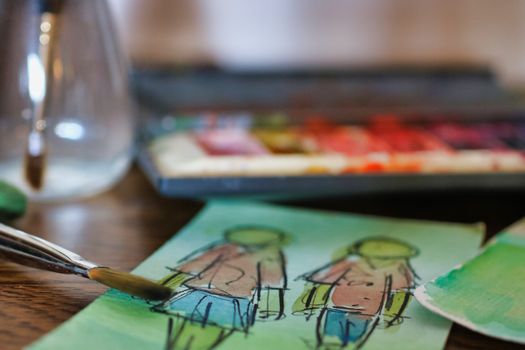
Close-up of watercolor artwork with paintbrushes and palette, showcasing creativity indoors. Photo: Nick Collins / Pexels
Choosing the best watercolor paint sets is just the first step; knowing how to use them effectively and care for them will ensure you get the most out of your investment and elevate your artistic practice. Here are some invaluable tips to guide you: * **Start with a Limited Palette:** For beginners, resist the urge to buy a set with dozens of colors. A smaller set of 12-18 high-quality colors, including primaries, secondary, and a few earth tones, will teach you more about color mixing and value. It forces you to understand how colors interact, which is a fundamental skill in watercolor. * **Experiment with Paper:** The type of paper you use has a monumental impact on how watercolors behave. Invest in good quality watercolor paper (at least 140lb/300gsm cold press is a great starting point). Cheap paper will pill, buckle, and absorb paint unevenly, leading to frustration. Different paper textures (cold press, hot press, rough) will also create varied effects. * **Proper Brush Care:** Your brushes are extensions of your hands. Always clean them thoroughly after each use, reshape them, and store them upright or flat to prevent damage to the bristles. A good quality brush can last for years and significantly improve your painting experience. * **Understand Water Control:** Watercolor is all about water. Too much water can lead to weak, washed-out colors and bleeding; too little can result in dry, streaky applications. Practice controlling the amount of water on your brush and in your paint mixes. This takes time and practice but is the key to luminous washes. * **Swatch Your Colors:** Upon receiving a new set, create a swatch chart. Paint a small square of each color and note its name, pigment code, and lightfastness rating. This helps you familiarize yourself with each hue, its transparency, and how it looks on paper. You can also add a gradient from concentrated to diluted to see its full range. * **Protect Your Artwork:** Once your painting is complete and dry, consider protecting it. Framing under UV-protective glass is ideal for pieces you want to display. If storing, place paintings between acid-free archival paper to prevent damage and fading. * **Don't Be Afraid to Mix Brands:** As you gain experience, you might find you love certain colors from one brand and others from another. It's perfectly acceptable to mix and match individual pans or tubes from different manufacturers to create your ultimate custom palette. Focus on the quality of individual pigments rather than brand loyalty. * **Keep Your Palette Clean (Mostly):** While a little mixing on the palette is natural, keeping your main mixing areas relatively clean helps you see true colors and prevents muddy results. Have a separate area for mixing purer hues and another for more complex, muted tones. By following these tips, you'll not only choose the best watercolor paint sets for your needs but also develop habits that will foster growth and satisfaction in your watercolor journey.

Comparison

FeatureSennelier L'Aquarelle (Artist)Winsor & Newton Cotman (Student)Daniel Smith Extra Fine (Artist)
Pigment QualityHigh concentration, honey-based binderGood concentration, synthetic bindersHighest concentration, unique pigments
LightfastnessExcellent (mostly ASTM I/II)Good (mostly ASTM II/III)Superior (mostly ASTM I)
Format AvailabilityPans & TubesPans & TubesTubes (some pan sets available)
TransparencyExceptional luminosityGood, slightly less vibrantOutstanding, many granulating colors
Rewetting AbilityExcellent (pans rewet very easily)GoodExcellent (tubes dry well in pans)
Price PointHighMid-RangeHigh
Best ForProfessional artists, vibrant workBeginners, students, practiceProfessional artists, unique effects

What Readers Say

"I finally upgraded to an artist-grade set after years of using student paints, and the difference is incredible. The colors in my new best watercolor paint set are so vibrant and rewet beautifully, making my art truly pop."

Sarah J. · Austin, TX

"As a beginner, I was looking for an affordable yet quality set. The recommended student-grade best watercolor paint set was perfect – easy to use, decent pigment, and a great starting point for learning techniques."

Mark D. · Seattle, WA

"My new set of tube watercolors has revolutionized my large wash paintings. The intensity and flow are exactly what I needed, allowing me to achieve smooth, deep colors effortlessly. Highly recommend for studio work!"

Emily R. · Denver, CO

"The travel pan set I purchased is fantastic for urban sketching. While a few colors aren't as lightfast as I'd prefer for gallery pieces, it's incredibly convenient and the majority of the pigments are excellent for quick studies."

David L. · Miami, FL

"I'm a botanical artist, and finding watercolors with true-to-life color and excellent transparency is key. This best watercolor paint set delivers on all fronts, allowing me to capture the delicate nuances of flowers with precision."

Jessica M. · Portland, OR

Frequently Asked Questions

What is the most important factor when choosing the best watercolor paint sets?

The most important factor is a balance between pigment quality (for vibrancy and lightfastness) and your skill level/intended use. Artist-grade paints offer superior quality but are more expensive, while student-grade options provide great value for learning and practice.

Are expensive watercolor paint sets really worth the cost?

For serious artists or those creating archival pieces, yes, expensive artist-grade sets are worth it. They offer higher pigment concentration, better lightfastness, and smoother application, leading to more vibrant and lasting artwork. For beginners, a mid-range set might be a better starting point.

How do I make my watercolor paints last longer?

To make your watercolors last, especially pans, ensure they are completely dry before closing the lid to prevent mold. For tubes, cap them tightly. Always clean your brushes thoroughly after use to avoid contaminating your paint wells. Store them in a cool, dry place away from direct sunlight.

What's the difference between opaque and transparent watercolors?

True watercolors are inherently transparent, meaning light passes through the pigment and reflects off the paper, creating luminosity. Opaque watercolors, sometimes called gouache, contain white pigment or fillers that make them less transparent, allowing them to cover previous layers more easily. Most watercolor sets focus on transparent pigments.

Can I mix different brands of watercolor paints?

Yes, absolutely! Many artists mix and match individual colors from different brands to create their ideal palette. As long as they are all watercolor paints (and not, for example, acrylics), they are generally compatible. Focus on the quality of the individual pigment rather than brand loyalty.

Who should consider buying a professional-grade watercolor set?

Professional-grade watercolor sets are ideal for experienced artists, those creating fine art for display or sale, and anyone who prioritizes the highest quality pigments, superior lightfastness, and a broad range of colors for their work. They offer an unparalleled artistic experience.

Are watercolor paints toxic?

Most modern watercolor paints are non-toxic, especially those labeled for student use. However, some artist-grade pigments may contain heavy metals (e.g., Cadmium, Cobalt) which can be harmful if ingested or handled improperly. Always check the labels for safety warnings and practice good hygiene by not eating or drinking while painting and washing hands afterward.

What are granulating watercolors, and why would I want them?

Granulating watercolors are pigments that settle into the paper's texture rather than lying flat, creating a beautiful, speckled, or mottled effect. Artists often desire them for adding texture, depth, and character to landscapes, skies, or abstract pieces, providing a unique visual interest that non-granulating colors cannot achieve.

Choosing the best watercolor paint sets is a personal journey, but with this comprehensive guide, you're now equipped to make an informed decision. Invest in quality that matches your ambition, and watch your artistic visions come to life with vibrant, lasting color.

Topics: best watercolor paint setsprofessional watercolor paintswatercolor sets for beginnersartist watercolor palettepigment quality watercolor
Leo List
Brampton weed
Adultwork EstrelaBet Vai de Bet R7 Bet Betão Galera Bet Rainbet Bet9ja Shop SportyBet BetKing Sisal Loto Foot Hollywoodbets YesPlay Odibets RushBet Jugabet BetWarrior BetCity MSport betPawa Fortebet